Showing posts with label real reviews. Show all posts

Tuesday, August 18, 2015

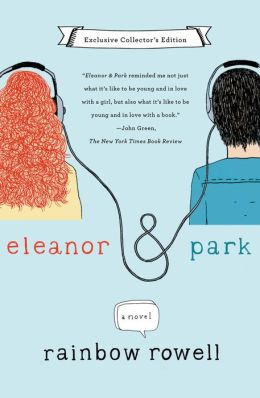
Eleanor and Park

Title: Eleanor and Park
By: Rainbow Rowell
Rating: 

Get It Here:
Barnes and Noble
Book Depository


Eleanor and Park has been a teen fiction phenomenon - especially for realistic teen fiction when so many of the popular teen titles have been fantasy dystopian novels. The first work published by Rainbow Rowell, Eleanor and Park is an incredibly enjoyable read.

The book is about two teenagers in the 1980's. Eleanor has just moved into a new neighborhood and finds herself immediately at the receiving end of school bullying. This is because she is different - she dresses differently, acts differently (doesn't fit into popular 80's stereotype behavior), and is chubby. Add in the fact that Eleanor is dirt poor, living in an emotionally abusive household (where her mother gets beaten by her stepfather and she shares a small room with all four of her younger sibling), and she is the perfect target for bullying, the perfect protagonist to sympathize with. I admit that sometimes I feel like Rowell over did it with all of the obstacles that Eleanor had to go through - especially since she doesn't go as deeply into these problems as she should or could have. For such a little book, she sure has tried to pack in a lot of conflict.

Park on the other hand comes from a Leave It to Beaver family. His father is a veteran from the Korean war and his mother is a Korean woman that his father brought back to the States with him (and who no one discriminates against...). He has two very white grandparents who live just next door (he eats dinner at their house once a week) and a brother who looks more white than he does. No one picks on Park and as much as he doesn't like the popular kids, he's quasi-friends with them. For the most part, Park keeps his head down and no one bothers him while he reads his comic books on the school bus. 

The two of them hate each other at first but when they begin to share a seat on the school bus, they eventually become closer through the sharing of comic books and music. Here is where the novel is seriously rich in 80's references and while I do know my comics, I have to admit that I completely missed some of the music references (being born in 88 and growing up in the 90's...). Now, a lot of people didn't like the romantic development between the two characters. Many complain that while their friendship did have a good and realistic transition, the transition from friendship to relationship was a bit abrupt. I personally didn't find the changes in their relationship particularly disorienting but I'm fairly lenient about these things.

The book changes perspective between the two characters - some of the chapters no more than a few sentences before switching perspective. Some people didn't like this about Rowell's style and claimed that it made you feel detached from her characters. I didn't have this problem at all and didn't think the writing style took away from relating with the characters.

In terms of entertainment, I had no complaints with the novel but there are some things (like the ending - I mean, really Rainbow Rowell? Really?! and other details) that pulled the book down a bit for me.

First, I was confused by the Romeo and Juliet references in the book. Eleanor and Park are covering this Shakespearean tragedy in school and Eleanor immediately dismisses the idea that Romeo and Juliet is a love story (a great point that I learned thanks to a REALLY good 6th grade Humanities teacher). Eleanor points out that the story isn't really about love but about children thinking they're in love without knowing what love is. This is made apparent when taking into account how in love Romeo is with Rosaline in the beginning of the play and how completely he forgets her when he meets Juliet. He falls in love too easily and doesn't really understand what love is.

"Romeo and Juliet are just two rich kids who've always gotten every little thing they want. And now, they think they want each other."
"They're in love…" Mr. Stessman said, clutching his heart.
"They don't even know each other."
"It was love at first sight."
"It was 'Oh my God, he's so cute' at first sight… it's Shakespeare making fun of love."                                                                                                                          (Rowell, 41)
I liked that Rowell had her character make this observation. I agree with the observation. Now, the reference is kind of misleading. The prologue of Eleanor and Park opens in a very particular way and the fact that a Romeo and Juliet reference was made, I thought was foreshadowing for the end of the story (which I believed would be a reverse West Side Story). But alas, this was not the case. The only way I can understand the reference being made at all is if Rowell is trying to juxtapose Eleanor and Park with Romeo and Juliet. Where Romeo and Juliet were shallow, impulsive, and thought themselves in love, Eleanor and Park were deep, thoughtful, and actually were in love -  but the ending of the novel (which I won't give away just yet) made me question whether or not this comparison is true.

The other issue I had with the novel was the social/historical accuracy of the story. I don't profess to know much about the 1980's but I was a bit taken aback by how accepting everyone was of Park and his mother. I mean, for a majority of the book, everyone keeps mistaking Park for every other Asian ethnicity but Korean but that's the extent of his struggles with being ethnically diverse. This seems a bit simplistic and unrealistic to me. Especially since not many years before that the U.S was in the Korean war (like in the show MASH that they watched in Park's house) and years before that, Japanese Americans were put into internment camps because of Pearl Harbor. I live in New York, one of the most ethnically diverse cities in the U.S in 2015 and there's still racism and bigotry going on but Omaha, Nebraska in the 1980's is somehow more tolerant of diversity? I doubt it.

Continuing on this track, I also found it strange that Eleanor's relationship with DeNice and Beebi was completely accepted by the community. Racial tension was still prevalent in the 80's and Eleanor's only friends are black and from a completely different community than hers (as Rowell states the kids were bused in from other neighboring towns). Eleanor eats lunch with these girls but no one from her predominately (or even completely) white town oppose this friendship, especially in the middle of Nebraska? I don't know, maybe I'm over exaggerating the tension that existed during the time because I wasn't there myself.


In response to why Park was Korean and a bit about racial tension in Nebraska during the 1980's Rowell said this in her blog:
It was a really poor, really white neighborhood, near the airport. The kids who lived there, like me, were bussed to a high school in a black part of town, for integration... It was a really poor, really white neighborhood, near the airport. The kids who lived there, like me, were bussed to a high school in a black part of town, for integration... It’s not that everyone in our neighborhood was racist, but it was the kind of place where people still flew the Confederate Flag on their porches.I couldn’t figure out how anyone who wasn’t white could even survive in our neighborhood. I could barely survive in our neighborhood. My seat mate said that this kid grew up on his block, that his dad was a Vietnam War veteran. So Paul wasn’t exactly discriminated against in any classic, horrible way – that I observed – but his race was present, always. Like, there were so few Asian people in North Omaha at that time, people would always look at him twice.
I just feel that Rowell could have done a better job of showing this issue in Park's life. He seems self-conscious about his ethnicity but it seems to come from himself and not from his community. Rowell could have delved deeper into this issue. 

Finally, I also really hated the ending of this book which wasn't really an ending at all. I feel like this is becoming a trend with Teen Fiction - authors writings endings that just taper off and leave the reader feeling like they still don't know what happens. Did the boy get the girl or not? Are they together or not? Was their love mutual or not? I hate that. It's a personal opinion and other might disagree but I feel like most novel (unless they have a sequel) should have some sort of resolution (unless it's point is that in life things don't always resolve so neatly). I feel like Eleanor and Park focused so heavily on their romance that the reader being left wondering what happens at the end doesn't give the justice. I also feel disappointed that we don't find out what happens to Eleanor's family which was a huge part of Eleanor's story. There are way too many questions left at the end of the book and honestly, I felt as though the ending was a bit lazy. 

Overall though, I did really enjoy the book. I was invested in the characters and read the book in one day. The story line was engaging and but for the few problems listed above, I felt it was a great novel for teens about feeling different, the hardships of growing up, and falling in love. 

For those of you who have liked this book, please spread the word to your friends. I was recently made aware that this book had been banned (by a parents association with nothing better to do) in Minnesota because of cursing and sexual language. Honestly,  I don't think the characters in the novel curse or use sexual language any more than real life bullies in Facebook or any other social media do. And frankly, I think it's ridiculous that kids are exposed to most of these things in television, movies, and social media but as soon as a kid reads these same things in  library book suggested to them by their local librarian, it's a problem. 

Please read about this issue here and give me your own opinion on the matter. 

Thanks so much and keep reading. 

Monday, August 3, 2015

The Infinite Moment of Us

Title: The Infinite Moment of Us
Author: Lauren Myracle
Rating: 


Get it Here:
Barnes and Noble
Book Depository

The Infinite Moment of Us is a teen fiction novel about two teenagers trying to figure our their lives the summer before they go away to college. Wren is a preppy parent pleasing girl who has never taken chances and done anything for herself. She feels oppressed by her well-meaning parents’ expectations of her and instead of going to a college nearby, finds a way to get away from them and her problems. Charlie is a foster kid with a sad past. He lives with foster parents and a foster brother that love him and yet he can’t bring himself to call his foster parents mom and dad because of a fear of abandonment. He also has never known romantic love as the only relationship he’s ever been in was with a person who wouldn’t open herself to him emotionally, initiating a sex-only relationship with Charlie. Both go to the same school and the summer before they book head off in different directions, they decide to get to know each other (as they’ve been in the same school for years, have notice and been intrigued by each other but have never approached one another).


It wasn’t a book I hated and it wasn’t a book I liked. It was just okay. And that bothered me because I usually have very strong opinions about novels. Unfortunately, while Wren and Charlie’s love story was cute, I didn’t feel the characters were fleshed out enough, the character development shoddy and the writing choppy in its themes and timing.


To begin with, i was frustrated with the fact that Wren did not act her age. The teenage characters in the books were supposed to be eighteen and the dialogue sometimes felt juvenile for the age group. Wren also read like a fifteen year old instead of an eighteen year old. I’m not saying that everyone matures at the same rate. I myself was sheltered as a teen but she read almost too childlike and it bothered me. Especially since the book was targeted at the higher end of the teen fiction age bracket.

    As a general rule, there is a correlation between the age of a novel’s main characters and the age of its readers. Readers gravitate towards characters that are close to them in age. Therefore if the main character is eighteen, it is likely the novel’s readers will be in their late teens or early twenties.


But here, I felt that Myracle completely missed the mark with her age group. Had she marketed the book towards a younger audience, it would have made more sense.


Another of my complaints about the book, is how choppy her themes are. First there is Wren’s feeling of oppression towards her parents controlling her. While the author does develop this in the beginning of the book, the theme is basically lost when Wren tells her parents that she’s renouncing their college plans for her and that she is following her own path. Her parents are disapproving but it is light in comparison to the was she sets up their controlling ways in the beginning of the book. Her problems seem a bit hollow and as her relationship with Charlie grows, making her own decisions and being her own person takes a back seat to her relationship with him. This is frustrating to me because it messing up her character arc and story line and because it makes her feel like a weak female character. She then develops a feel of abandonment - why Wren when Charlie was the one who was abandoned by her mother? There is no reason given in the book why Wren is so set on closing herself off from Charlie every time something goes wrong when Charlie is the one who would have been more prone to running from her, of being scared of being abandoned again…


I’m not sure if the author just wasn’t sure of her characters or if she let her characters dictate the story in a way that made her writing seem sloppy, but the fact that Wren’s self-discovery was halted by a boy and three chapters of that halt were dedicated to whether or not Charlie and Wren would have sex bothered me. This with the fact that Wren giggled a lot, baked brownies, and only ever wore skirts and dresses, made her seem a bit two-dimensional to me. And even her pondering if souls had trees couldn’t fix her character flaws for me.


It bothered me that the characters but aside a lot of their bigger problems to fixate on having sex. It bothered me that Charlie’s abandonment issues were glossed over with one short story about his mother leaving him. The author went more into the next girl he was involved with being emotionally unavailable than getting into how he felt about his mother. And all Charlie ever really went into was how in love he was with Wren, the deeper stuff? the harder stuff? that was glossed over as “I don’t want to talk about it” and one lined explanations he made about his childhood in passing.


Miracle did her characters a serious disservice by only skimming the surface of her characters that while nice, had little depth to them. Especially when Wren’s motivations throughout the novel kept changing. First she wanted to get away to prove to herself that she could be her own person without her parents. Then she wanted to prove to herself that she could do something big and help other people. Then she wanted to prove that she could leave town and depend on herself. Then she didn’t want to leave because she didn’t want to leave her boyfriend but then… As a character, Wren was a mess.


Finally, I absolutely HATED the ending of the book which was not really an ending at all. It was a drop off, a “fill in your ending here” ending and I hate that. Maybe if the rest of the story had been more structured, i wouldn’t feel that this ending was lazy on the author’s part but that’s how it felt to me. Lazy. And before I conclude, as a nit-picky aside, I also felt that the beginning of the novel would have read better in first person than in third. This feeling went away halfway through the book as I’d gotten used to the voice of the characters by that point but I feel the story would have benefited from the readers being closer to the characters.


So overall, it was an okay read. It was short and I finished the book in one day. And while it was enjoyable, there were glaring problems for me with this book. If you’re looking for a light summer read to pass the time while on the train, this might be something to pack in your bag. But this book will not change you life, will not make you think deeply about your relationships, or your place in the world. The cover is pretty and the characters are likable (for the most part), their romances cute and overly teenage-y.


If you do pick up The Infinite Moment of Us, please let me know what you think or what parts of the book you loved or hated! Look forward to hearing your thoughts!

Friday, July 31, 2015

Fahrenheit 451

Title: Fahrenheit 451
Author: Ray Bradbury

Get It Here:
Barnes and Noble
Book Depository

Rating: 

Fahrenheit 451 is my first book by Ray Bradbury and I'm so glad I've read it. It's a little book packed with so much meaning and bibliophilia.

This book was on a long list of books I should have read a long time ago but didn't. It may even have been assigned to me once and I just didn't do it. Sadly, this behavior was very like me as a pre-teen/teen and I'm glad to rectifying this now.

Fahrenheit 451 (which is only 165) opens with Guy Montag, a fireman. He is burning books for a living and we are given to understand that this is what firemen do in the future - they don't put our fires, they start them. From here we learn the parameters of the world. It moves faster - literally. People drive at above 90 mph, sometimes killing other either for fun or by accident - something that is societally acceptable and not thought of as a tragedy. Giant tv monitors the size of a wall are installed into peoples homes so they can be entertained by endless television shows with no plot. Montag shows us that people are so busy being stimulated by images and sound and adrenaline that they doesn't question their society, they don't question why they can't read books, and they keep telling themselves that everything is okay as long as everyone is having fun.

But it seems not everyone is having fun. Very early into the book Montag walks home to find his wife dead. Montag's wife Mildred has taken a large amount of sleeping pills in order to kill herself. It seems A LOT of people in this book try to kill themselves: jumping off of roofs, provoking firemen who are trying to burn your books, getting hit by cars, taking too many narcotics... Mildred is patched up by the paramedics and when she wakes up the nest day, it's like the suicide never happened. She denies that she would ever do such a thing that it must have been a mistake. It's distressing how adamant she is about it not having happened and how happy she is.

Then Montag meets a teenage girl who is different from everyone else who is just going about their lives in this oddly absent way. She looks at things and people - really looks - and thinks about them. He is intrigued by her and loves the way she is silly and thoughtful and appreciative of the things around her. It gets him to consider the way he lives his life and realize a lot of the things he had been blind to earlier.

During one of his raids into a house, we see Montag snatch up a book and take it home with him. This is illegal and not only could he go to jail, but he could have his house burned down for containing books within it. We find that he has been collecting books for years but has never read them. Montag's need to steal these books shows that he has been unhappy for a long time but has never taken the time to realize it. From then on, Montag shares his secret with Mildred (which is a terrible idea because she is a vapid and happily ignorant woman), finds someone to confide in, gets caught for stealing and keeping books, commits murder, and goes on the run. I don't want to ruin Montag's internal transformation for readers who haven't read the book yet so I won't go any further.

I loved the messages in the book. It talks about:

  • why books enrich life (because they possess quality or information and create the leisure to digest it)
  • why books are important 
  • why making your own decisions is important 
  • how quality is better than quantity
  • how you should appreciate the things around you instead of shutting them out
  • how ignorance is false bliss

It shows us how easily we are fooled by quantity over quality. The the book the government replaces books that make you think and music that makes you feel and reflect, with mindless television. They reprogram social interaction so that we don't create real connections with each other anymore. People are so busy having SO MUCH TO DO. They have SO MUCH TV TO WATCH. They're so busy being visually and audibly stimulated that they don't have time to think and the media that is available to them is so shallow that they have nothing to think about.

I don't think this is much different from the way a lot of us live our lives now. I'm always so busy trying to get from one tutoring job to another, from completing one task to the next, that I don't see things outside my bubble. We're just as plugged in as the characters in Fahrenheit 451 with out Angry Bird and Candy Crush Saga, with our iPad movies and headphone music. We are most of us always plugged in and we need to stop giving our brains so much mindless stimulation that we give up self-reflection, imagination, and quiet. The book teaches us to appreciate the things around us instead of shutting them out.

In addition, I feel we also have a problem discerning quality over quantity. People fall into this trap a lot thanks to marketing. You can buy a sandwich at a deli for $6 or $7. It would have real ingredients like turkey and cheese, lettuce and tomato, and whatever else you could think of. But why would you spend your money on that when a fast food meal with fries and a coke is the same price or cheaper? A lot of people would buy a supersize McDonalds meal and not the deli sandwich despite the ingredient being from less dependable sources and the lack of nutrition.

I also like that the novel emphasizes the importance of books. Now that the US is giving a huge push to STEM subject (which is totally fine), I feel like the humanities are becoming under-appreciated. Reading is incredibly important as it deepens critical thinking skills, teaches one how to argue a point, find evidence, support a claim, structure an argument, etc. Books also have a bit of every subject in them: psychology, science, history, etc. They let people go to places they may never be able to go to in real life. They allow people to live several different lives in the span of a few hours. They make us think about ourselves, about the people who came before us, and the people that will follow. As Faber in Fahrenheit 451 states:
The books are to remind us what asses and fools we are. They're Caesar's praetorian guard, whispering as the parade roars down the avenue, 'Remember, Caesar, thou art mortal'. Most of us can't rush around, talk to everyone, know all the cities of the world, we haven't time, money or that many friends. The things you are looking for, Montag, are in the world, but the only way the average chap will ever see ninety-nine percent of them is in a book. Don't ask for guarantees. And don't look to be saved in any one thing, person, machine, or library. Do your own bit of saving, and if you drown, at least die knowing you were headed for the shore.
Bradbury, 86
Fahrenheit 451 shows us how important it is to think for ourselves. Montag realizes that he has been following other people's rules for the majority of his life and even when he decides to go against the system he feels like he is just following Faber's orders. He says:

"Faber?"
"Yes?"
"I'm not thinking. I'm just doing like I'm told, like always. You said get the money and I got it. I didn't really think of it myself. When do I start working things out on my own?"
"You've started already, by saying what you just said..."
Bradbury, 92
I feel like this is the moment when Montag starts to take responsibility for himself. Before this he is making his decisions rashly and impulsively. This is when he tries to think through his decisions, when he tries to plan for the future. It's the first step to Montag being a force of change.

Fahrenheit 451 also goes into the negatives of "ignorance is bliss". Mildred and Captain Beatty are the best examples of this in the book. Mildred swears that she is happy and that the system works but she tries to commit suicide in the beginning of the book and is terrified of the idea of books in general. Her whole character arc reminds me of the Allegory of the Cave. She represents the cave dwellers that would not believe and that would rather kill than have the lies they are living revealed to them. Beatty is another great example except that he has read books and has been exposed to books. He quotes texts throughout the majority of the question and even goes out of his way to state that "what traitors books can be. You think they're backing you up, and then they turn on you." (Bradbury, 107). His is a story of someone who was wronged by literature, turning away from the thing he loved most and basking in that hatred until he it undid him.
Beatty wanted to die.
In the middle of the crying Montag knew it for the truth. Beatty had wanted to die. He had just stood there, not really trying to save himself, just stood there, not really trying to save himself, just stood there, joking, needling, though Montag, and the thought was enough to stifle his sobbing and let him pause for air. How strange, strange, to want to die so much that you let a man walk around armed and then instead of shutting up and staying alive, you go on yelling at people and making fun of them until you get them mad, and then...
Finally, I really appreciated that the novel didn't end with a happily ever after ending. Instead, it ends with a hope for the future, a hope that things may change, maybe not immediately but that if everyone plays their part, that things just may settle and rebuild after the rubble in cleared.

Fahrenheit 451 was an amazing book and I would recommend it to anyone looking for a thought proving book or a short read.

The Longest Ride


Title: The Longest Ride
By: Nicholas Sparks

Get it here:
Barnes and Nobles
Book Depository

Rating:

I'm writing about a Nicholas Sparks book so it goes without saying that I have to mention how formulaic a lot of his books are. Boy meets girl. Girl and boy fall in love. In the end someone dies. You can usually count on Sparks to give you a death that has some deeper spiritual meaning but also somehow solves a problem in the novel - the romance novel version of a deus ex machina, if you will. These are all things to look forward to in The Longest Ride.

This is maybe the fourth novel I've read of Sparks' previous novels. I have The Last Song, Safe Haven, The Choice, and Dear John under my belt. Most of these I read because I knew my friends and I would end up watching the movie and I have a general rule about reading the books to movie adaptations before watching the film. I enjoyed most of the books except The Choice which IMDB says with come out in theaters in 2016.

I have to say as far as Sparks' books go (at least as far as the ones I've read), The Longest Ride is one of the best. The novel follows two storylines. The first belongs to Ira and his wife Ruth. In the beginning of the novel, Ira, a ninety year old man drives his car off the road. After finding himself stuck with no hopes of escaping the vehicle, his wife Ruth (who has passed away years before) keeps him company and encourages him to survive while Ira and the reader wait for help to arrive. Ira states and thinks that he is hallucinating his visions of Ruth and that his dead wife is really his subconscious trying to keep him alive but Sparks does a good job of creating some spiritual ambiguity there. Ruth distracts Ira while he waits for help by having him recount their lives together. Through Ira's retelling we see the couple's entire lives together. We see how they met, how they fell in love, the difficulties they had staying together when the world and a war (WWII) tried to tear them apart. We see how marriage and growing old affect their relationship.

Theirs is a truly touching story to read. As Sparks himself says, they are:

a wonderful example of enduring love.

The second storyline follows Luke and Sophia. Sophia is a senior in college trying to figure out what to do with her life after graduation. Luke is a bull rider risking his life in order to keep his mother's farm from foreclosure. Theirs is a modern love story. It shows Sophia's sorority house home and how she hates the cliques and gossip she's subjected to while living there. It shows the aggressive, preppy, rich, white ex-boyfriend and his superiority complex. We get scenes of Luke's life on his ranch where he and his mother work hard every day in the hopes of making ends meet. Ultimately, they fall in love and Luke must choose between getting the girl or continuing to ride to save his mother's ranch.

I have to say that to me, Ira and Ruth are the true gems of the novel. They're what make the book great for me. They feel genuine and more complex as characters to me than Luke and Sophia (maybe because the conflict in the younger couple's storyline was stretched out too long for it to not be overly dramatic). Granted, there was a lot more to see of Ruth and Ira as they spent a majority of their live together, whereas Luke and Sophia had only months to their storyline. But still, there's something commercial about the way Sophia and Luke read off the page. Luke's problem - to ride or not to ride - while understandable at first, becomes exasperating and redundant when EVERYONE is telling him not to. And while I understand that guilt is a very strong motivator, something about the way that story arc flowed bothered me. I feel like this awkwardness in the Sophia and Luke storyline really points back to the formulaic essence of Sparks' writing. He even states on his website:
...because Ira and his wife, Ruth, were such a wonderful example of enduring love, I wanted to find a perfect counterpoint as an example of new love. And that’s how I came up with Luke and Sophia. Sophia was created to resonate with my college-aged fans, and Luke is really the quintessential All-American guy.
Ira and Ruth read as a moment of inspiration for Sparks - full bodied and bursting with life, while Luke and Sophia seem to fit some reader demographic. I'm NOT saying that the characters weren't well written but their motivations were sometimes lacking and the intensity of their story paled in comparison to that of the older couple.

In terms of writing style, I have to say, Sparks has some neat tricks up his sleeve. I like the way he uses Ira's visions of Ruth in the car as a device to move their storyline along. He uses the device flawlessly and it reads smoothly. I also appreciated the way he separated his chapters. Often, I would be dragged through some emotional rollercoaster belonging to one couple only to be flung into the storyline of another. It kept me reading and turning pages. It kept me in invested in his characters, if a little frustrated that I had to wait to find out what happened next (which is also a great thing for a writer to do - leave them wanting more). I also have to admit that I had to physically stop myself from crying and sobbing on the train (where I usually do most of my reading) because of one of Ira's letters to Ruth. Something about that relationship struck me deeply and I have to applaud Sparks for being able to create this connection.

Overall, I would recommend this book to anyone who likes romance novels or is thinking of reading the book before watching the movie adaptation which is now out in DVD. For those of you eyeing this movie, here's the trailer.


Let me know what you thought of the book or if you liked any of the MANY changes that were made for the movie adaptation.