Sunday, January 31, 2016

The Name Game

Do you know what the meaning of your name is?

Names are really important. We use them to identify and make sense of things. Human beings have a need to organize their thoughts and names are a way of doing that. In fact, this is were stereotyping comes from. When you are tired or frustrated, your brain will leap to the nearest word or name that applies to a given thing. But where do these words come from? Roots. 

In English, 65% of all English words come from Greek and Latin roots - meaning words from Greek and Latin that are borrowed but altered and share the same meaning. For example, the word PHILANTHROPIST meaning the desire to promote the welfare of others, expressed especially by the generous donation of money to good causes comes from the Greek PHILO (meaning love), ANTHROPO (meaning human), and the Latin IST (meaning one who or that which). These roots combine to mean one who is a lover of humanity - someone who loves and wants to nurture humanity which is what a philanthropist does through charity.

Usually, the fact that all words can be broken down into its root parts isn't an incredibly important fact unless you study linguistics, are in the medical field, or are studying for your SAT's. 

But all languages are rooted in one or two other older languages as shown in the language tree below. 


Still, roots are integral to how and why we name things. And if anyone has ever asked you for the meaning of your name, that meaning is derived from language roots. 

My name, Amanda is a seemingly American name. Many people are surprised to hear that I come from Brazil because I am pale and have an Americanized name. The name Amanda is very American but like most of English, it pulls heavily from Latin and can it's meaning can be compared to many romance languages that stem from Latin (like Romanian, Portuguese, Spanish, French, and Italian). 

The name Amanda comes from the Latin feminine gerundive (form of a verb) of the root AMARE. 
In contemporary languages, this can be seen as: 
The Portuguese AMAR
The Spanish AMAR
The French AIMER
The Italian AMARE
and the Romanian A IUBI

Borrowing from the word love, my name can mean: Worthy of Love or Child Who is Loved By All. 

Speaking a latin language had made it easy for me to guess the name meaning of those who have Latin based names like:

Lucas - meaning light for the Portuguese LUZ (meaning light)
Mariana - having someone to do with the sea for the Portuguese MAR (meaning sea or ocean)

It's easy to look up name meanings in websites dedicated to baby names. My favorite is http://www.babynames.com. I use this not only for fun but also to help me name characters in writing projects I'm working on. Name meaning is a great tool to generate names for new characters in stories and websites like BabyNames is great for this because you can look up names by gender, ethnic background, meaning, etc. 

Learning how roots work are a great way of coming up with character names, expanding your vocabulary, and understanding new languages.

If you are interested in learning a list of often used roots, check out this list here.

I hope this post encourages you to learn more about roots and expand your vocabulary.

Have a great February!


Monday, January 4, 2016

New Years, New Habits

Happy 2016!

January is the time for planning and making changes, goal setting and resolutions. Go-getters are making vision/inspiration boards to motivate them to complete their goals, organizing their space and their planners, and thinking of new habits of incorporate in their daily lives.

I've been in a spin the last few days, making list after list of the above. I've made a list of new habits (writing daily, doing yoga in the morning, exercising three days a week, eating better, etc) and started a habit tracker in my planner as well as updating my Habit RPG.

--> What is Habit RPG? Habit RPG aka Habitica is a free habit building and productivity app that treats your life like a game.  For every habit you complete daily, you gain experience points to help you character "level up". You can go on quests, find and buy items with money you gain from completing to-dos, dailies, and habits. If you do not complete tasks and check them off, your character is penalized by losing health points.

I've finally set deadlines on on goals I've procrastinated on for the last few years.

This year I've decided to:

  1. Read at least 100 books by 2017.
  2. Read for (at least) an hour and a half each day. I plan on reading a "fun" book (something read mainly for enjoyment) for (at least) 45 minutes each day and reading an "educational" book (something informational or culturally enriching) for the remaining 45 minutes each day. This way, I'll be able to able to read books that I enjoy while reading more of the classics I've shied away from since graduating.
  3. Make videos on book reviews and study skills. I've always liked the idea of vlogging on these topics but have never had the equipment and the space necessary to run with the idea. This year, I'll be trying to learn video editing in order to successfully complete this goal. Hopefully, I'll have more reviews up this year because of the vlogging which I think will be an easier and will be a more cohesive way to get my ideas down.
  4. Produce at least one online class for the student study spot. I've had the classes planned for some time now but have never filmed the videos necessary to complete the course. The classes will focus on essay writing, reading skills, and building better study habits.
I hope that revealing my plans for this new year will explain some of the future changes in litologie and that it may inspire you to consider actively creating positive changes in your daily life by setting new goals and encouraging you to organize your space and your time. 

Happy New Year! 

Tuesday, December 15, 2015

8 Christmas Gifts for Book Lovers


Here is my gift guide for book lovers and avid readers for this holiday season. I hope it helps you guys with some of our shopping troubles and makes your life a little less stressful.


1. Book Nerd Mugs


I absolutely love book nerd mugs. I see pictures of these adorable drinking apparatuses on Tumblr and Instagram all the time and because mugs are such a small, non-necessity, I would never go out of my way to get one for myself. It doesn’t mean I don’t want one. It doesn’t mean I haven’t imagined myself sitting on my couch or arm chair drinking tea in my “Never Judge A Book By It’s Movie” mug while reading a long daunting classic by Dostoyevsky. It just means that I’m “frugal” and always talk myself out of buying one because I don’t “need” it.


This year, I’ve started a tradition with my boyfriend where I’ve demand he get me a book nerd mug every year for Christmas. It’s a self imposed tradition but I’m looking forward to having witty book puns on my mug while I guzzle tea and try to write my 500 words for the day. I really like the idea of book nerd mugs as a gift because not only are they cute, but they’re functional. I mean, a girl’s got to drink beverages sometime right?

Though I’ve seen a few cute book nerd mugs in retailers like Barnes and Noble, Michaels (they have scrabble tile mugs!!), and container stores, the cutest and most accessible mugs to shop for online come from Etsy. If you don’t know what Etsy is (and seriously, how could you not?), Etsy is an online marketplace where people can sell their homemade products to others. Think Ebay but handmade and not used.For cute book nerd mugs, check out:  https://www.etsy.com/search?q=book%20mugs.

These can be great stocking stuffer gifts or if you fill the mug with small things like cosmetics or seasonal candies, can be a great low cost gift for friends.

2. Personal Library Kit


This isn’t as useful a gift at the mug - not everyone needs a personal library kit but if your friend or significant other is always lending books out to friends (like I do), then this might be a really fun gift for them. It really tickled me when I first saw it in a Barnes and Nobles years ago.

I don’t own one of these personally and I haven’t lent out books to my friends in months. When I was younger though (and loved sharing - and shoving - new favorites at friends), I would have really benefited from owning this adorable kit. I was always getting anxious when I couldn’t find a specific title in my shelves (still get that way, in fact) and would have liked to know when something was unaccounted for because of being lent out as opposed to my just mis-shelving it.

These kits comes with 20 self-adhesive pockets and checkout cards to put in them, a date stamp and ink pad, and filing cards for you to keep with you so you have a record of what is loaned out while your book is off making new friends.

This gift may not be the most useful for everyone but is a gift someone will think is cool regardless. To purchase your own personal library kit, check out http://www.modcloth.com/shop/office-desktop/check-me-out-library-kit.

3. Book Lover’s Journal

Another affordable gift that a book lover would appreciate is a Book Lover’s Journal - think goodreads but in a notebook. While a lot of people like using websites like goodreads to rate or log books that they’ve read, others (like me) might like a notebook like this to reflect on books they’ve finished. 

These notebooks usually have a list of general information for you to include in cataloging the book (title, author, number of pages, genre). Some only have a notes section for you to free write your thoughts on the book like this:


From My Bibliofile: A Reading Journal For Book Lovers - http://www.amazon.com/My-Bibliofile-Reading-Journal-Lovers/dp/0307465373/ref=sr_1_5?ie=UTF8&qid=1449462618&sr=8-5&keywords=reading+journal


While others give prompts for you to write about each book that you read like this: 


From the Book Lover's Journal - http://www.amazon.com/Book-Lovers-Journal-Reading-Organizer/dp/1441304827/ref=sr_1_2?ie=UTF8&qid=1449462618&sr=8-2&keywords=reading+journal
Some also include quotes sections, which I think are a serious bonus. 

These notebook or reader's journals can be a lot of fun to fill out of you're someone who keeps track of the books that you read like I do or if you take reading challenges throughout the year like I do - I've already surpassed my 50 books for the year! 


You can find different variations of these on amazon at http://www.amazon.com/s/ref=nb_sb_noss_1?url=search-alias%3Daps&field-keywords=reading+journal. 


4. Floating or Invisible Shelves


I love books, more than I probably should. And what this means is that I buy way too many books at the expense of my wallet and the nonexistent space on my bookshelves. Ergo, the need for more shelving. I love the way invisible shelves look and if your friend or significant other has the shrinking bookshelf space problem, invisible shelves are the perfect solution. What I like about these small and awesome optical illusion shelves is that unlike large bookshelves, they don't take up floor space. Instead they suspend your books higher up for a really cool effect.


So if your friend has books piles up on the floor against the wall, these book shelves are the perfect way to help them make their space look less cluttered, to get their books more organized, and to add an interesting decorative flair to their room. 


You can find these shelves at Barnes and Nobles.


5. Book Retailer Gift Card


A lot of people don't like to give gift cards for Christmas. I'm usually one of these people. Gift cards don't feel personal and honestly, I feel a little lazy trying to give them to people as gifts. The weird thing is, I love receiving gift cards as gifts. I like not having to spend my own money on books, video games, and movies. I like buying apps without having to spend my own money. Instead of telling myself I don't need a new book or new video game or app, I just buy it because why not? I think this is why gift cards are so amazing. We stop being so strict with ourselves when we spend money from a gift card and we are able to enjoy getting small things we would have convinced ourselves we didn't need. 

Since this article is specifically about buying gifts for book lovers, obviously I'm hinting at bookstore gift cards. I personally like getting Barnes and Nobles gift cards (since I like to support physical stores I can visit instead of online stores - more on that here). But there are a lot of other popular online book retailers like: Bookoutlet, Powell's, and Strands.  


6. Book Subscription Box


If you know someone who is an avid reader, a book subscription box is the perfect gift. A book subscription box is a monthly service that sends a book (and depending on the subscription, book related things). What comes in these boxes depends on which subscription you apply for. The most popular of these subscriptions are:


  • Owl Crate - Owl Crate is a subscription box that you can pay for every month for $30. These boxes include (at least) one hardcover novel and four or five bookish things to go with the book. Each month has its own theme and the book and objects sent in the box reflect it. Last month, the theme was Myths and Fairytales and I received Soundless by Richelle Mead. I was sent a castle necklace, a mermaid tale pattern compact mirror, an amazing tin of tea (themed after fairytale princesses - mine was Snow White), and a Camp Half-Blood bracelet.

    I really enjoyed receiving this box in the mail. It was something to look forward to and honestly, I was so excited about not having to pick out a book myself (having to go through Barnes and Nobles book shelves for an hour before picking just 2 books to leave with), that I read it almost immediately. The smaller gifts were cute and appreciated and I really really liked the tea. This is the only subscription box that I subscribe to out of this list because after looking up unboxing videos I felt this had the most to offer but I plan on trying some of the other subscription boxes as well sometime in the future.

    The best part is that you can gift someone a specific number of months worth of this subscription box. You can gift someone up to 6 months for $167, 3 months for $86, or just one month, to show someone what getting a subscription box would be like.

  • YA Chronicles - This is a book subscription box from Australia. The subscription costs $30 plus shipping and handling. The box includes a book and two to five extra bookish things. This subscription also had different themes every month that the book and extras follow. November's box was themed: What Nightmares Are Made Of and included The Masked Truth by Kelly Armstrong, Organic Unicorn Blood Tea, Harry Potter Dark Mark Tattoo, and a Monster's Inc. decal.

    This is maybe not the best subscription for someone who lives in the U.S since shipping would be very expensive ($24.99), payments are not recurring so you will not automatically be charged every month if you buy a one month subscription box. This means that you can buy someone one box and not be worried about being charged again next month. You can also buy 6 months, 3 months, or one month worth of subscriptions in one shot before having to manually resubscribe at the end of the those months.

  • Uppercase - I really want to try this subscription out. Uppercase has 3 different options available for their subscriptions. They range from $17 - $30 a month depending on which one you choose. These boxes include: a new hardcover young adult novel, a signed book or bookplate, 1-2 bookish items, and a personalized note. November's box included Wolf by Wolf by Ryan Graudin, a cute picture frame about books, a book pin, a book stack keychain, and two letters from Uppercase. I would suggest trying this box for at least one month and seeing if you like it.

  • The Book Drop - This is the most customizable book subscription as it offers 4 different kind of books for subscription: The Jane (contemporary and historical fiction with some literacy books - in paperback), The Ernest (thrillers or action novels with some non-fiction books - in paperback), Young Adult (paperback books appropriate for readers ages 14-15+), and Children (paperback books perfect for kids ages 8-12).

    Unlike the subscription boxes above, which are young adult book boxes, here you can really choose the kind of literature you like to read. But unlike the above which includes hardcover copies of books, these are all paperback. Also, these subscriptions don't include bookish extras. If these things aren't deal breakers for you, then maybe this if the better and more frugal choice for you. Depending on which box you choose and how long you subscribe for, the cost runs from $13-90.

  • Book Riot - This is a quarterly book box, meaning it is sent every 3 months. They offer both an adult box and a young adult box depending one your preference. This is the most expensive of the book subscriptions listed and is $50 per box. I've decided to get at least one box from this subscription just to see what it is like but wouldn't want to pay more to feel like I'm getting less (the same amount of things I would get from other subscription boxes but 3 months apart). This book box does include 2 books (instead of just one) and 5 bookish things. I would suggest that you try this at least once and see who you like it before ruling it out all together.  


Book subscription boxes are a great gift because you not only get a book but you get add-ons but it's fun getting something in the mail that isn't a bill or bank statement. It also gives an avid reader more books without the trouble of having to go out and purchase it yourself. It also sends you something you might not have heard of that becomes your favorite new book. 

7. A Collection from Juniper Books    


PENGUIN CLASSICS 5 BOOK SET

        MAKE YOUR OWN DROP CAPS

     HMH “2 WORKS” MODERN CLASSICS

                JOHN STEINBECK SET    


Juniper Books has an amazing book collections for sale on their website. These are collectables that look amazing on your shelf and that you'll be proud to display. The most affordable set I've found is $65 and most of these collections are by author (though few are genre specific). These are pricey collections that range between $150 and $400.  The website also offers Make Your Own sets which will help more frugal shoppers to create a smaller and more affordable collection without compromising on the quality of these beautiful books. 


These would make wonderful gifts for anyone who has thought of collecting books. I also think it would be a wonderful gift to give someone a collection of their favorite author. These collections also include children's literature sets for younger readers (Peter Pan, The Secret Garden, etc). 


I've had my eye on these collections for the past two years and have no yet been able to convince myself to make the the purchase. These would be a great gift and would surely make any reader happy. 


8. An Ebook Reader

Physical books are amazing. I like the weight of them in my hand and I love the smell of books but there is something to be said about having a good ebook reader. I love being able to switch books whenever I want on my Nook and I love being able to carry a full library with me without breaking my back. 


An ebook reader is a life savor if you are an English Major in college as you can have all of your reading materials in one device without it being an issue to your bank account or added weight to your backpack. Ebook readers also have an amazing function that will find quotes for you and save minutes in trying to find quotes for essays.


Ebook readers are also kind of personal. Picking the right kind of ebook reader is somewhat of a challenge. There are many different models within the same brand. I myself have the Nook E-Ink Glowlight from Barnes and Nobles. It doesn't go online, it doesn't have apps, it just lets me read. I got it because I didn't want to be distracted from my reading by all of the possible add-ons. It also simulates a real paper feel while reading so my screen doesn't have glare. Furthermore, because of the glowlight feature, I can read in bed after having turned off the lights. This is terrible for making sure I have enough hour of sleep, but amazing to my reading experience. 


I have purchased Samsung Nook tablets for other family members with all the bells and whistles. They love them and use them as book an e-reader and surrogate-laptop (since I also bought them keyboard cases). I think these are wonderful gifts that are incredibly useful. The new Nook Glowlight is on sale right now for $99. It is waterproof and had some enhancements that my glowlight does not. Honestly, I might upgrade to this nook before the holiday season ends.


I hope this gift guide for book lovers has been helpful to you. Please let me know of you have anything else you think should be put on the list or if you own any of these products and your opinions on them.


Hope you have a great holiday!

Friday, October 30, 2015

Why Learning Journals Are Important

Learning journals are a great tool for reviewing new material, setting and tracking academic goals and progress, and can act as study guides come test time. As a tutor, I use learning journals to have students review the material we've covered in the day's lesson. As a student, learning journals can be used to create an encyclopedia of information that is easy to find and that is precise and all in one place.

How does it work?
For younger students (ages 5-10) it works very much like a journal entry. For these students, who are less likely to review material on their own, learning journal assignments force them to look at the material we've covered and go through it again in their own words. I tell students to write me an entry telling me about three (out of the many things) we've covered in the day's lesson. They must explain rules of new concepts in as much detail as they can (for things like grammar and spelling) and patterns they've learned or picked up on (in things like reading comprehension - for example, that the moral of fables is often the last sentence in the story). All of the topics they choose to write about must use examples and if they choose, they can also write about how they feel about the material - if they thought it was hard or if they like it or not.

Keep in mind that with this age group, it may take a few tries to get the learning journal process right. Children this age aren't used to writing as much (or in as much detail) as learning journals demand.

For example:


In this first entry, the student needs to do more work. While they did name things that they learned in the lesson, they did not explain or show examples of the material we covered.


This second entry shows what was covered in the lesson and gives enough information that the student is reviewing the material and shows some knowledge as to how to apply the information.

Though I don't often see teachers using learning journal entries in homework, as a tutor who sometimes sees students only twice (if not once) a week, learning journal makes sure that kids are looking at the material again sometime between when I taught the material and when I see them next. Parents can use learning journal assignments with their kids to see what their children are learning and how well children understand the material they are covering in class. Learning journal entries shouldn't take more than 10-15 minutes and are a really great review for things like spelling tests (what spelling rules are you learning in this week's spelling words), grammar (what rules did we learn about sentence structure and plurals), etc. After assigning learning journal entries, I've found that students that complete the assignment not only retain more, but can apply they information they've written about better than students who don't complete their learning journal assignments.

For older students (in middle school and beyond), learning journal becomes less like a journal entry and more like a bullet journal for school material. Students can dedicate an entire notebook to their learning journal. With a table of contents and a color coding system for different subjects, learning journals become incredibly useful encyclopedias of school material.

A learning journal for higher level students will look somewhat like this:

If you are using a notebook specifically for learning journal entries, the bullet journal would be a good model for how to set up your learning journal notebook.

On the left, page, is a post-it note color coordinating classes so that difference in class subjects are easily distinguishable. Also, the sticky note shows an icon library to organize what kind of information is being written down. The categories are just a sample of what a student might use but can be adjusted to each individual student.

On the right page is an index of all the work/ material that you are putting in your learning journal. Using a table of contents makes it so that you will not longer have to flip through a notebook to find the material you are looking for. Instead, students will log page numbers on the bottom corners of their notebook pages so that they can find they information they are looking for quickly and easily.


This is what a full two page spread might look like. A header is written at the very top (and you can color coordinate the heading if you choose). On the sides of each page is a colored tab to show what subject the page is on. In this case, green is English. For this notebook, the margin of the first two lines of the notebook were colored green for English, the next two after that were blue for Music, the next to after that, pink for Math, and the last two were colored orange for French - in the same order that they were written on the Icon Library post-it note.


This creates a great effect on the outward sides of the pages so that you can see where each color is without opening the notebook. Because this is a mock learning journal (used to show these techniques), there aren't enough pages to show the full effect of the color coding system. But, you can begin to see from this picture that certain pages are obviously distinguishable in color and subject.


As you can see, learning journal would be a great tool for reviewing before exams as all of the information is easily accessible and the material should be precise. Learning journals really are a great tool for review. They SHOULD NOT be used as a notebook for taking notes in at school but more as a review book for material you covered in school.

Please let me know if you use learning journals or if you would like a more detailed post about what learning journals are and how they should be used. Or let me know if you would like me to post more pictures of what learning journals should be like for either age group.

Hope you guys have a great Halloween.

Happy Studying!


Sunday, August 30, 2015

App Review: Hemingway

Hemingway is an online text editor app started by two brothers Adam and Ben Long who had realized that their writing was hard to understand because of long, imprecise sentences. This text editor is said to help writers have bold and clearer writing and while bold and clearer writing - much like Hemingway's signature style which was direct and precise, with short sentences that said volumes.

You can access Hemingway App on your web browser by going to www.hemingwayapp.com. The app is also available as a desktop app or program is you are willing to pay $9.99. I would personally stick to the website since the website doesn't specify any special features for the desktop version.

Hemingway opens to a page full of writing that explains how the app works. There are color coded highlights to show you possible writing mistakes that Hemingway has found in the writing. These mistakes include: hard to read sentences (how clear what you are saying is), superfluous word choices (see what I did there? :P), adverbs (which may be place-holder words that don't add meaning to your sentences), and when you are using passive voice. The Hemingway App also tells you what grade level your writing is in. Hemingway can also be used as a tool to see if your writing level is suited to your audience.

Keep in mind that most articles in newspapers are written at a 6th - 8th grade reading level.


In order to put your text into Hemingway, just click on the writing explaining the program, delete what's there and either start typing or paste your text in. These tools are great may be helpful in some situations but not all. Here are some instances where using the Hemingway app would make sense:


  1. Blog Writing

    This is when your writing really does need to be precise and to the point - and writing at a 6th grade reading level may be to your benefit. For the most part blog articles are expected to be short and sweet and to the point. Make it too long - and your readers don't make it to the end. Make it too short - and you might as well have just posted that on twitter. In this Hemingway will root out unnecessary words and make your writing clearer.

  2. Creative Writing

    Now, this depends on your writing style. Hemingway was known for being the opposite of flowery so if you like long flowing sentences that sound pretty - this app will just highlight everything you write. After testing some of my own creative writing, I found that this was not really for me. I like my adjectives and adverbs and honestly, as long as you're not overdoing them, what's the harm of keeping them in your story?

  3. Essay Writing (BUT only for grades 6-10)

    Hemingway can be used as an effective editing tool for essay writing if you know how to use it properly. For younger students, Hemingway will point out when your sentences need to be separated into smaller sentences (usually when your sentences are hard to understand) or when you are using too many unnecessary words. For younger students, this tool is extremely useful because you're still learning to communicate your ideas in writing. It will root out common mistakes like passive voice (which really shouldn't be used in essay writing) and overuse of adjectives and adverbs.

    As you start to get older though, you may start to outgrow the Hemingway App. I tried putting in one of my A grade college essays into Hemingway ( I was a British Literature major in college) to see what it would say and well, Hemingway was not happy with me. The overall paper was grade level 13 (which is deemed "okay" in clarity) and I had a lot of long (though grammatically correct) sentences Hemingway was more than happy to highlight. My introduction paragraph as a standalone was grade level 18 and the clarity was considered poor. Suffice it to say, there were a lot of highlights in my intro.


Honestly, I was a bit bummed. I got an A on this paper and I remember being really proud of it. And because of this, Hemingway may not be suited for college grade essay writing.

To learn more about the Long brothers and how the created the Hemingway App, check out this New Yorker article.

If you've been using the Hemingway App please let me know how and if it's been working for you. If you've never heard of it before, check it out and let me know about your experience with the app. I hope this helps some of your with your writing. Good luck with your assignments. 


Monday, August 24, 2015

Historical Fiction Literature Study Guide

With classes right around the corner for middle and high schoolers, back to school means handing in summer assignments and beginning-of-the-year in class essays. In-class essays are especially nerve-racking because you're never told what your essay question will be, and you'll be expected to make your argument in a limited amount of time. If these parameters make you nervous, you're not alone. But but if you have in-class essays in Social Studies or Humanities, here's a guide to make you an expert on your historical fiction novel so you'll be able to essay plan on the spot.


Before you read the book:
1. Research the time period the book takes place in. In historical fiction, researching the historical event that the book focuses on will help you better understand what certain characters are supposed to represent and the hardships they are facing. Also, historical fiction will reference and hint at historical events but the author may not have time to fully explain each event. Prior research will help fill in the gaps.


While you are reading the assigned novel:
1. Start an "important characters" list. You should add to this list as you continue on through the book. Each character should have a two or three sentence character summary explaining character traits and what their role is in the story.
2. After every chapter you should write 3-5 bullet points explaining important plot points (summarizing what happened in that chapter).
3. After every chapter, write a list of social or historical facts you have learned about the time period. How do these things affect the characters and the book?
4. After every chapter pick 2 quotes that you think are important in that chapter and analyze it. Why is the quote important? What does it say about the characters or events it involves? What theme/idea does it hint at and why?


After you a finished with the book:
1. What did you learn about this time period?
2. What are three themes that were repeated in the book? (draw on your quote analyses to pick these themes)
3. What do you think the author was trying to say/teach about this time period?
4. Pick two characters. How did they change and grow throughout the story? Why were these transformations important?


I hope this guide helps you in preparation for your essays. Guides like this can be used throughout the year to prepare for midterms and finals, as well as being used as "active reading" exercises for your assignments. Please let me know if you find this guide helpful and good luck with your new school year/semester. 

Tuesday, August 18, 2015

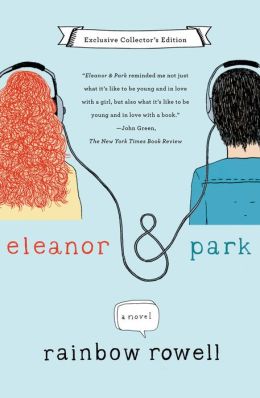
Eleanor and Park

Title: Eleanor and Park
By: Rainbow Rowell
Rating: 

Get It Here:
Barnes and Noble
Book Depository


Eleanor and Park has been a teen fiction phenomenon - especially for realistic teen fiction when so many of the popular teen titles have been fantasy dystopian novels. The first work published by Rainbow Rowell, Eleanor and Park is an incredibly enjoyable read.

The book is about two teenagers in the 1980's. Eleanor has just moved into a new neighborhood and finds herself immediately at the receiving end of school bullying. This is because she is different - she dresses differently, acts differently (doesn't fit into popular 80's stereotype behavior), and is chubby. Add in the fact that Eleanor is dirt poor, living in an emotionally abusive household (where her mother gets beaten by her stepfather and she shares a small room with all four of her younger sibling), and she is the perfect target for bullying, the perfect protagonist to sympathize with. I admit that sometimes I feel like Rowell over did it with all of the obstacles that Eleanor had to go through - especially since she doesn't go as deeply into these problems as she should or could have. For such a little book, she sure has tried to pack in a lot of conflict.

Park on the other hand comes from a Leave It to Beaver family. His father is a veteran from the Korean war and his mother is a Korean woman that his father brought back to the States with him (and who no one discriminates against...). He has two very white grandparents who live just next door (he eats dinner at their house once a week) and a brother who looks more white than he does. No one picks on Park and as much as he doesn't like the popular kids, he's quasi-friends with them. For the most part, Park keeps his head down and no one bothers him while he reads his comic books on the school bus. 

The two of them hate each other at first but when they begin to share a seat on the school bus, they eventually become closer through the sharing of comic books and music. Here is where the novel is seriously rich in 80's references and while I do know my comics, I have to admit that I completely missed some of the music references (being born in 88 and growing up in the 90's...). Now, a lot of people didn't like the romantic development between the two characters. Many complain that while their friendship did have a good and realistic transition, the transition from friendship to relationship was a bit abrupt. I personally didn't find the changes in their relationship particularly disorienting but I'm fairly lenient about these things.

The book changes perspective between the two characters - some of the chapters no more than a few sentences before switching perspective. Some people didn't like this about Rowell's style and claimed that it made you feel detached from her characters. I didn't have this problem at all and didn't think the writing style took away from relating with the characters.

In terms of entertainment, I had no complaints with the novel but there are some things (like the ending - I mean, really Rainbow Rowell? Really?! and other details) that pulled the book down a bit for me.

First, I was confused by the Romeo and Juliet references in the book. Eleanor and Park are covering this Shakespearean tragedy in school and Eleanor immediately dismisses the idea that Romeo and Juliet is a love story (a great point that I learned thanks to a REALLY good 6th grade Humanities teacher). Eleanor points out that the story isn't really about love but about children thinking they're in love without knowing what love is. This is made apparent when taking into account how in love Romeo is with Rosaline in the beginning of the play and how completely he forgets her when he meets Juliet. He falls in love too easily and doesn't really understand what love is.

"Romeo and Juliet are just two rich kids who've always gotten every little thing they want. And now, they think they want each other."
"They're in love…" Mr. Stessman said, clutching his heart.
"They don't even know each other."
"It was love at first sight."
"It was 'Oh my God, he's so cute' at first sight… it's Shakespeare making fun of love."                                                                                                                          (Rowell, 41)
I liked that Rowell had her character make this observation. I agree with the observation. Now, the reference is kind of misleading. The prologue of Eleanor and Park opens in a very particular way and the fact that a Romeo and Juliet reference was made, I thought was foreshadowing for the end of the story (which I believed would be a reverse West Side Story). But alas, this was not the case. The only way I can understand the reference being made at all is if Rowell is trying to juxtapose Eleanor and Park with Romeo and Juliet. Where Romeo and Juliet were shallow, impulsive, and thought themselves in love, Eleanor and Park were deep, thoughtful, and actually were in love -  but the ending of the novel (which I won't give away just yet) made me question whether or not this comparison is true.

The other issue I had with the novel was the social/historical accuracy of the story. I don't profess to know much about the 1980's but I was a bit taken aback by how accepting everyone was of Park and his mother. I mean, for a majority of the book, everyone keeps mistaking Park for every other Asian ethnicity but Korean but that's the extent of his struggles with being ethnically diverse. This seems a bit simplistic and unrealistic to me. Especially since not many years before that the U.S was in the Korean war (like in the show MASH that they watched in Park's house) and years before that, Japanese Americans were put into internment camps because of Pearl Harbor. I live in New York, one of the most ethnically diverse cities in the U.S in 2015 and there's still racism and bigotry going on but Omaha, Nebraska in the 1980's is somehow more tolerant of diversity? I doubt it.

Continuing on this track, I also found it strange that Eleanor's relationship with DeNice and Beebi was completely accepted by the community. Racial tension was still prevalent in the 80's and Eleanor's only friends are black and from a completely different community than hers (as Rowell states the kids were bused in from other neighboring towns). Eleanor eats lunch with these girls but no one from her predominately (or even completely) white town oppose this friendship, especially in the middle of Nebraska? I don't know, maybe I'm over exaggerating the tension that existed during the time because I wasn't there myself.


In response to why Park was Korean and a bit about racial tension in Nebraska during the 1980's Rowell said this in her blog:
It was a really poor, really white neighborhood, near the airport. The kids who lived there, like me, were bussed to a high school in a black part of town, for integration... It was a really poor, really white neighborhood, near the airport. The kids who lived there, like me, were bussed to a high school in a black part of town, for integration... It’s not that everyone in our neighborhood was racist, but it was the kind of place where people still flew the Confederate Flag on their porches.I couldn’t figure out how anyone who wasn’t white could even survive in our neighborhood. I could barely survive in our neighborhood. My seat mate said that this kid grew up on his block, that his dad was a Vietnam War veteran. So Paul wasn’t exactly discriminated against in any classic, horrible way – that I observed – but his race was present, always. Like, there were so few Asian people in North Omaha at that time, people would always look at him twice.
I just feel that Rowell could have done a better job of showing this issue in Park's life. He seems self-conscious about his ethnicity but it seems to come from himself and not from his community. Rowell could have delved deeper into this issue. 

Finally, I also really hated the ending of this book which wasn't really an ending at all. I feel like this is becoming a trend with Teen Fiction - authors writings endings that just taper off and leave the reader feeling like they still don't know what happens. Did the boy get the girl or not? Are they together or not? Was their love mutual or not? I hate that. It's a personal opinion and other might disagree but I feel like most novel (unless they have a sequel) should have some sort of resolution (unless it's point is that in life things don't always resolve so neatly). I feel like Eleanor and Park focused so heavily on their romance that the reader being left wondering what happens at the end doesn't give the justice. I also feel disappointed that we don't find out what happens to Eleanor's family which was a huge part of Eleanor's story. There are way too many questions left at the end of the book and honestly, I felt as though the ending was a bit lazy. 

Overall though, I did really enjoy the book. I was invested in the characters and read the book in one day. The story line was engaging and but for the few problems listed above, I felt it was a great novel for teens about feeling different, the hardships of growing up, and falling in love. 

For those of you who have liked this book, please spread the word to your friends. I was recently made aware that this book had been banned (by a parents association with nothing better to do) in Minnesota because of cursing and sexual language. Honestly,  I don't think the characters in the novel curse or use sexual language any more than real life bullies in Facebook or any other social media do. And frankly, I think it's ridiculous that kids are exposed to most of these things in television, movies, and social media but as soon as a kid reads these same things in  library book suggested to them by their local librarian, it's a problem. 

Please read about this issue here and give me your own opinion on the matter. 

Thanks so much and keep reading.